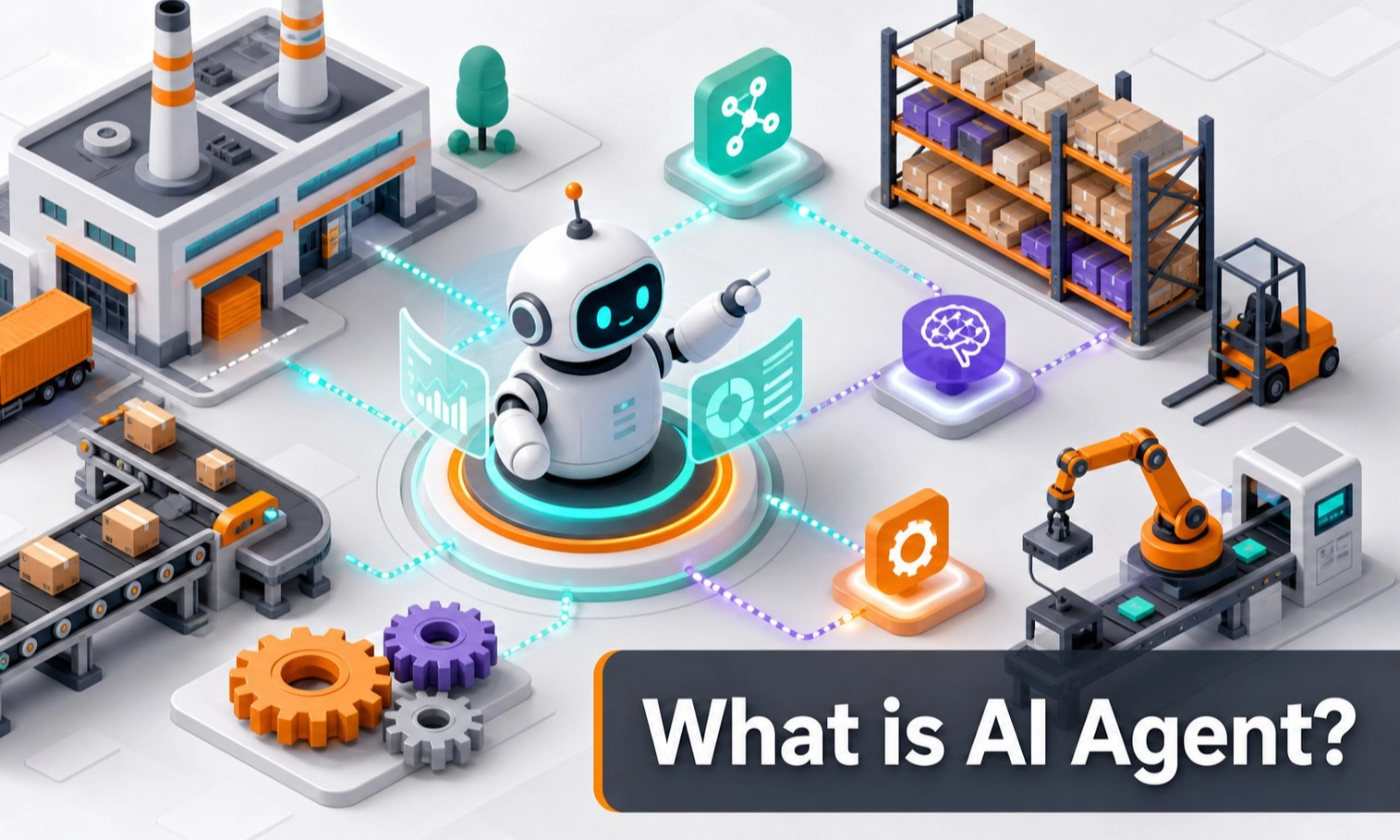
What Exactly Is an AI Sales Agent?
An AI sales agent is autonomous software that handles sales-related tasks — including lead response, qualification, follow-ups, and customer conversations — without requiring a human to manage every interaction. Unlike simple automation scripts, an AI sales agent understands context, makes decisions, and adapts its behaviour based on what the customer needs.
Think of it as your best salesperson — one who never sleeps, never misses a lead, and can handle 50 conversations at the same time.
For B2B equipment businesses in Southeast Asia, this matters enormously. When a construction firm in Jakarta sends an inquiry about a hydraulic excavator at 11 PM, your AI sales agent responds instantly with relevant specifications, pricing ranges, and availability — instead of that lead sitting in an inbox until your sales team arrives the next morning.
According to Harvard Business Review, companies that respond to leads within 5 minutes are 100x more likely to connect than those that respond after 30 minutes. In the equipment industry, where deals can be worth $50,000 to $500,000+, that speed-to-lead difference is the difference between winning and losing a sale.
How Does an AI Sales Agent Work?
An AI sales agent operates through a combination of technologies working together:
1.Natural Language Processing (NLP)
The agent reads and understands customer messages — whether they arrive via email, WhatsApp, web chat, or SMS. It doesn't just match keywords; it understands intent. When a customer says "I need a 20-ton crane for a 6-month project in Johor Bahru," the agent recognises the equipment type, capacity, duration, and location.
2.Decision Engine
Based on the customer's request, the agent decides what to do next. It might:
- Send product specifications and pricing
- Ask qualifying questions (budget, timeline, project location)
- Route the inquiry to the right salesperson
- Schedule a demo or site visit
- Send a formal quotation
3.Knowledge Base & Reasoning
The agent can be trained using your product catalogue, pricing rules, inventory information, FAQs, agreement terms, service areas, and CRM or enquiry data. It does not only retrieve fixed answers — it can reason across your business information to understand customer intent, ask the right follow-up questions, compare suitable options, and guide customers toward the most relevant product, rental, or sales solution.
This helps the AI Sales Agent provide more relevant and business-specific responses instead of relying on generic AI knowledge.
4.Learning Loop
Every interaction teaches the agent something. Over time, it learns which responses convert best, what questions customers ask most, and how to handle objections specific to your equipment range.
A typical AI sales agent may processes 200-500 inquiries per month for a mid-size equipment dealer. That's the equivalent of 2-3 full-time sales coordinators. There is no limit.
The Differences: General AI Chatbot vs Antbuildz AI Sales Agent
| Feature | General AI Chatbot | Antbuildz AI Sales Agent |
|---|---|---|
| Main role | Answers basic questions | Handles B2B sales enquiries |
| Industry fit | General-purpose | Built for industrial products |
| Product knowledge | Basic FAQs or prompts | Uses your catalogue and knowledge base |
| Recommendation ability | Gives generic suggestions | Reasons through customer needs |
| Lead qualification | Collects simple details | Asks sales-ready follow-up questions |
| Business rules | Limited control | Follows your approved rules |
| Rental & sales support | Not purpose-built | Supports rental, sales, and product enquiries |
| Sales handover | Basic chat transcript | Sends qualified enquiry details to your team |
| Best use case | Simple website support | Complex B2B product conversations |
Most general AI chatbots are built as general-purpose tools for many industries. Antbuildz AI Sales Agent is different because it is designed for industrial B2B businesses, where customers often need help with product selection, specifications, rental or sales terms, pricing rules, and enquiry follow-up.
Why Industrial B2B Businesses Need AI Sales Agents
Industrial B2B businesses often lose sales not because the customer has no interest, but because the enquiry process is too slow, scattered, and difficult to follow. Customers may come from websites, WhatsApp, ads, calls, social media, or referrals — but sales teams are not always able to respond fast, qualify properly, and follow up consistently.
An AI Sales Agent helps solve these gaps by responding instantly, capturing buyer intent, using your product knowledge, and guiding customers toward the right product, rental, or sales solution.
1. Slow First Response
High-intent buyers expect fast replies. When a customer is looking for a machine, tool, spare part, industrial product, or rental solution, they are often comparing multiple suppliers at the same time.
If the first response is delayed, the buyer may move on. An AI Sales Agent can reply instantly, answer common questions, and keep the conversation moving even when your sales team is busy or offline.
2. Too Many Entry Points
Enquiries no longer come from one channel. Customers may contact your business through your website, WhatsApp, email, social media, ads, phone calls, or referrals.
Without one clear flow, important conversations can become hard to track, assign, and follow up. An AI Sales Agent helps create a more consistent enquiry process by collecting key information and turning scattered conversations into structured sales opportunities.
3. Lost Buyer Intent
Many sales conversations lose important details such as urgency, budget, location, product requirement, rental duration, quantity, and delivery timeline.
An AI Sales Agent can ask the right follow-up questions and capture deal intent during the conversation. This helps your sales team understand what the customer really needs before they step in.
4. Weak Traffic Conversion
Many industrial businesses already spend money on websites, SEO, ads, social media, and content, but a large portion of visitors leave without becoming qualified enquiries.
An AI Sales Agent helps convert more visitors by engaging them immediately, answering product questions, and guiding them toward the next step instead of letting them browse and disappear.
5. Scattered Product, Rental & Sales Knowledge
Product details, specifications, pricing rules, rental terms, availability, agreements, and sales knowledge are often spread across files, people, spreadsheets, WhatsApp chats, and internal systems.
This makes it difficult for sales teams to answer accurately and consistently. An AI Sales Agent can use your approved knowledge base to provide more reliable answers and reduce dependency on individual staff knowledge.
6. Inconsistent Sales Follow-Up
Some leads are followed up properly, while others are delayed, forgotten, or lost. This is especially common when sales teams are lean and handling too many enquiries at the same time.
An AI Sales Agent helps capture enquiry details, qualify customer needs, and make follow-up easier. Your team can then focus on serious opportunities instead of spending most of their time handling repetitive questions.
Key AI Agent Features to Look For
When evaluating an AI Sales Agent for an industrial B2B business, do not only look at whether it can “chat”. The real value comes from how well it can be trained, controlled, monitored, and connected to your sales process.
1. Agent Behaviour Setup
A good AI Sales Agent should allow you to define how the agent talks, what it should focus on, what it should avoid, and when it should hand over to a human. This is important because every business has different sales rules, customer types, product categories, and enquiry handling methods.
2. Knowledge Base
The agent should be trained with your actual business knowledge, not only general AI knowledge. This includes your product catalogue, specifications, FAQs, pricing rules, service areas, agreement terms, rental or sales policies, and common customer questions. A strong knowledge base helps the agent give more accurate and relevant answers.
3. Reasoning Over Customer Needs
Industrial B2B customers often do not ask perfect questions. They may only describe their job, problem, location, or product requirement. The AI Sales Agent should be able to reason through the enquiry, identify missing information, ask follow-up questions, and guide the customer toward a suitable product, rental, or sales solution.
4. Workflow Control
The agent should support clear enquiry workflows. For example, it should know when to collect contact details, when to ask for rental duration, when to request delivery location, when to suggest product options, and when to escalate to the sales team. Without workflow control, the AI may chat well but fail to create useful sales outcomes.
5. Lead Capture & Deal Intent
A proper AI Sales Agent should help identify serious buyers, not just answer questions. It should capture customer name, company, contact details, product interest, location, timeline, quantity, budget, and buying or rental intent. This helps the sales team focus on leads with stronger commercial potential.
6. Conversation Monitoring
Your team should be able to review AI conversations, check lead quality, identify common customer questions, and improve weak answers over time. Conversation monitoring is important because it helps you improve both the AI Agent and your overall sales process.
7. Human Handover
The agent should know when not to continue. Complex technical requirements, custom pricing, high-value projects, special agreements, and unclear customer requests should be escalated to a human sales representative. Good handover protects customer experience and reduces the risk of wrong answers.
8. Integration Capability
As the business grows, the AI Sales Agent should be able to connect with other systems such as webstore, CRM, enquiry inbox, WhatsApp, email, inventory, or quotation tools. Integration is not just a technical feature — it helps turn conversations into trackable sales opportunities.
9. Analytics & Improvement
The system should give visibility into how the agent is performing. Useful data includes number of enquiries handled, common questions, captured leads, deal intent, missed answers, and conversation quality. These insights help the business improve its product content, sales process, and AI training.
Getting Started with an AI Sales Agent
Deploying an AI Sales Agent should not require a long technology project or heavy onboarding. Antbuildz AI Sales Agent is designed for fast self-deployment, so industrial B2B businesses can set up, test, and launch with minimum guidance.
Day 1: Set Up Your AI Agent
Create your AI Agent profile, define its role, set the preferred tone, and decide how it should handle customer enquiries. This gives the agent a clear behaviour framework before it starts interacting with customers.
Step 2: Add Your Business Knowledge
Upload or prepare your product catalogue, FAQs, specifications, service areas, rental or sales terms, agreement rules, and common customer questions. The better your knowledge base, the more useful and accurate the AI Agent becomes.
Step 3: Configure Sales Workflow
Set how the agent should qualify enquiries, what information it should collect, when it should ask follow-up questions, and how it should capture customer intent. This helps turn conversations into useful sales opportunities.
Step 4: Test in Playground
Before going live, test the agent using real customer questions. Check how it answers, whether it asks the right questions, and whether it follows your business rules. You can adjust the knowledge base and behaviour before launch.
Step 5: Launch and Monitor
Once ready, publish the AI Agent on your webstore or selected customer-facing channel. Your team can monitor conversations, review captured leads, identify weak answers, and improve the AI Agent over time.
Continuous Improvement
The first launch does not need to be perfect. The goal is to start quickly, handle common enquiries, reduce repetitive sales work, and improve through real customer conversations. As your product data, FAQs, and sales rules become stronger, the AI Agent becomes more capable.
Frequently Asked Questions
1. How much does an AI Sales Agent cost?
The cost depends on the package, AI Agent features, webstore requirement, knowledge base preparation, conversation volume, and any integration needed.
Some businesses may only need a basic AI Sales Agent for website enquiries and common questions. Others may need a more complete setup with product catalogue, rental or sales workflow, lead capture, AI Console access, webstore connection, and ongoing optimisation.
The main value is faster response, better enquiry qualification, stronger buyer intent capture, and fewer missed sales opportunities.
2. Can an AI Sales Agent handle technical questions about products or equipment?
Yes, if it is trained with the right product catalogue, specifications, FAQs, manuals, agreement terms, and business knowledge.
For industrial B2B businesses, the AI Sales Agent can answer common questions about product models, specifications, capacity, size, compatibility, rental duration, delivery area, usage requirements, and suitable alternatives.
For complex engineering, custom project, or special pricing cases, the agent should stay within its configured scope and guide the customer to the next best step.
3. Will an AI Sales Agent replace my human sales team?
No. The goal is not to replace your sales team, but to help them handle more enquiries with less repetitive work.
When implemented properly, an AI Sales Agent can handle up to 80% of the initial sales process — from first response and common product questions to lead qualification, buyer intent capture, and early-stage follow-up.
This allows your human sales team to focus on higher-value work such as relationship building, negotiation, site visits, key accounts, and closing serious opportunities.
4. How long does it take to implement an AI Sales Agent?
Antbuildz AI Sales Agent is designed for fast self-deployment with minimum guidance. A basic AI Agent can be set up within a day, depending on how ready your business information is.
The setup usually includes creating the agent profile, defining agent behaviour, adding your knowledge base, preparing FAQs, uploading product or service information, setting enquiry rules, and testing the agent before launch.
After launch, the AI Agent can continue improving as your team updates the knowledge base and reviews real conversations.
Conclusion
An AI sales agent is no longer a futuristic concept — it's a practical, proven tool that B2B equipment businesses in Southeast Asia are using today to respond faster, qualify better, and close more deals. With implementation costs dropping and capabilities growing, the question isn't whether to adopt an AI sales agent, but how quickly you can get one working for your business.
The equipment industry runs on relationships, speed, and accuracy. An AI sales agent delivers all three — 24 hours a day, 7 days a week, in every language your customers speak.
Ready to see how an AI sales agent works for equipment businesses? Book a free demo with Antbuildz and discover how AI can transform your sales process.